Universal has dropped the brand new trailer for THE FALL GUY, starring Ryan Gosling, Emily Blunt, Winston Duke, Aaron Taylor-Johnson, Hannah Waddingham, and Stephanie Hsu.
He’s a stuntman, and like everyone in the stunt community, he gets blown up, shot, crashed, thrown through windows and dropped from the highest of heights, all for our entertainment. And now, fresh off an almost career-ending accident, this working-class hero has to track down a missing movie star, solve a conspiracy and try to win back the love of his life while still doing his day job. What could possibly go right?
From real life stunt man and director David Leitch, the blockbuster director of Bullet Train, Deadpool 2, Atomic Blonde and Fast & Furious Presents: Hobbs & Shaw and the producer of John Wick, Nobody and Violent Night, comes his most personal film yet. A new hilarious, hard-driving, all-star apex-action thriller and love letter to action movies and the hard-working and under-appreciated crew of people who make them: The Fall Guy.
THE FALL GUY opensin theaters March 1.
Oscar® nominee Ryan Gosling (Barbie, La La Land, Drive) stars as Colt Seavers, a battle-scarred stuntman who, having left the business a year earlier to focus on both his physical and mental health, is drafted back into service when the star of a mega-budget studio movie—being directed by his ex, Jody Moreno, played by Golden Globe winner Emily Blunt (Oppenheimer, A Quiet Place films, Sicario)—goes missing.
While the film’s ruthless producer (Emmy winner Hannah Waddingham; Ted Lasso), maneuvers to keep the disappearance of star Tom Ryder (Golden Globe winner Aaron Taylor-Johnson; Bullet Train) a secret from the studio and the media, Colt performs the film’s most outrageous stunts while trying (with limited success) to charm his way back into Jody’s good graces. But as the mystery around the missing star deepens, Colt will find himself ensnared in a sinister, criminal plot that will push him to the edge of a fall more dangerous than any stunt.
Inspired by the hit 1980s TV series, The Fall Guy also stars Winston Duke (Black Panther franchise) and Academy Award® nominee Stephanie Hsu (Everything Everywhere All at Once).
From a screenplay by Hobbs & Shaw screenwriter Drew Pearce, The Fall Guy is produced by Kelly McCormick (Bullet Train, Nobody, Atomic Blonde) and David Leitch for their company 87North, and by Ryan Gosling and by Guymon Casady (Game of Thrones, Steve Jobs and executive producer of the upcoming series Ripley) for Entertainment 360. The film is executive produced by Drew Pearce, Entertainment 360’s Geoff Shaevitz and the creator of the original Fall Guy television series, Glen A. Larson.
L to R: Ryan Gosling is Colt Seavers and Emily Blunt is Judy Moreno in THE FALL GUY, directed by David LeitchL to R: Ryan Gosling is Colt Seavers and Emily Blunt is Judy Moreno in THE FALL GUY, directed by David LeitchRyan Gosling is Colt Seavers in THE FALL GUY, directed by David LeitchRyan Gosling is Colt Seavers in THE FALL GUY, directed by David LeitchL to R: Director David Leitch and Ryan Gosling (as Colt Seavers) on the set of THE FALL GUY
With only a couple more months left in 2023, will it be the movie year of the toy? Considering the BARBIE box office bonanza…probably. That’s especially true if you throw video games into that category. We’ve seen those Super Mario Brothers, a nifty true-life thriller on the making of TETRIS, another non-fiction sports flick involving the motor-racing world of GRAN TURISMO. And now we go from brightly colored pixel ‘shrooms to whirring-blade-fueled horror. Really, a game that elicits fear as you rack up the points? Oh yeah, this one is so popular there has already been at least one cinema rip-off (using those Saturday morning funsters THE BANANA SPLITS which this official fan club member did not appreciate). It’s kinda’ how THE SWORD AND THE SORCERER beat Conan to the multiplex by a few weeks in 1982. Well, now here comes the “real deal”, based on the gaming smash, and its follow-ups, from 2014. So, can moviegoers handle FIVE NIGHTS AT FREDDY’S? Grab a slice and collect those tokens!
It all begins with an unlucky security guard making his final late-night “rounds” in the food and fun emporium. After the main title we meet the main hero, Mike Schmidt (Josh Hutcherson). as he loses another job, this one’s security at a mall. It seems an incident triggered a childhood memory in which he saw his kid brother Garrett vanish forever from a family picnic. Now, the only family he has (the parents are long gone) is his kid sister Abby (Piper Rubio) whose behavior has her grade school teacher concerned. She’s retreated into her drawings and talking to her invisible friends. Mike’s gotta get a new job, otherwise, haughty Aunt Jane (Mary Stuart Masterson) will swoop in and grab custody (along with the government moola). His only chance is an odd supervisor at an employment service, Mr. Raglan (Matthew Lillard). He thinks Mike is perfect for an all-night security slot at a long-shuttered kiddie franchise, Freddy Fazbear’s Pizza. After getting a neighbor teen girl, Max (Kat Conner Sterling) to watch Abby, Mike takes the job. The joint is creepy with its old arcade games and empty pizza boxes, but nothing is more unnerving than the life-sized animatronic figures in Freddy’s band. Naturally, Mike drifts off to sleep, but something new has been added to his abduction nightmare. Five mute children appear to block his way. He jolts awake and gets the feeling that something is watching him. Meanwhile, Max picks up a “side hustle” with Aunt Jane. She and her pals will break in at Freddy’s, trash the place, and cause Mike to get fired. So will this plan work? And what will happen to Mike and Abby during those remaining nights at Freddy’s?
Hutcherson excels at giving Mike a constant vibe of sweaty desperation. He’s haunted by his past and full of dread about the future, Can he take care of lil’ sis? Or hold down any sort of job. His nocturnal childhood “cage” may have just found a “key” through Freddy’s place. But this release may just endanger the one person he strives to protect. As that person, Rubio as Abby has more energy than most “spooky” kiddies in other flicks. She conveys a dark sense of humor while standing up to her often too possessive “big bro”. Masterson is superbly “hissable” as the prime villainess here, a wicked aunt rather than a wicked stepmother, who’s even more snarky has she :plays nice” with Mike and Abby. Also, there’s a nice turn by Elizabeth Lail as a sympathetic policewoman whose beat just happens to include Freddy’s. There’s a bit of a romantic spark between her and Mike, but Officer Vanessa’s main mission is to put him on the “straight and narrow” while providing the proper “tools” for his deep dive into the old place’s mythos. And it’s great to see Lillard out of the “Scoobyverse” as the off-putting “red herring” (or is he), Raglan.
To quote uber-producer of modern horror, while with Seth Myers, Jason Blum, “We made this for the fans”. And so, for newbies (guilty) you may be perplexed, and more than a bit bored. as those same fan(atics) squeal and scream with delight with every game reference or cameo. This makes it difficult to compare, but the end cinematic results come off as another rather toothless (of course it’s rated ‘”PG-13″) time waster. It’s stunning how all the big “kills” (including major characters) are done “off-screen” with the discovered carnage hidden away from view. Director Emma Tammi does her best work in the scary pre-dawn moments at the “fun place”, but can’t hold our attention during the talky daytime set-ups, since many of the principals are one-note despite the team of screenwriters which includes her and the game’s creator Scott Cawthon. The biggest problem is that the game’s main focus, Freddy and his crew, don’t get a lot to do. This is a shame since the producers eschewed CGI for some nifty puppetry from the talented artists at Jim Henson’s creature shop (they made a menacing cupcake). The pre-teen crowd should have a blast yelling at the screen during Halloween group outings or slumber parties but horror “hounds” may be dreading (howling perhaps) a sixth day after FIVE NIGHTS AT FREDDY’S.
1.5 Out of 4
FIVE NIGHTS AT FREDDY’S is now playing in theatres everywhere and streams exclusively on Peacock
A scene from Episode 1 of German/Austrian crime drama “Pagan Peak: Season 3.” Courtesy of Topic.
The German/Austrian crime drama “Pagan Peak” is back for its third and final season, but it is fairly essential to understanding this final round to have seen the first two seasons, due to the substantial carryover of main characters and key issues shaping their current actions and attitudes. To help out, here is the link to my earlier review of “Pagan Peak”:
Once you read the review (or watch Seasons 1 and 2), you’ll be caught up. Now that you’re up to speed, be prepared for a radical tone shift from a suspenseful dark procedural into something much creepier. More Lovecraft and Lynch (that’s David, not Jane) than Dalgleish or Sherlock in this final season.
The drastic change caused me to check the creators’ credits. Sure enough there was a huge behind-the-cameras overhaul with completely new writers, directors, cinematographer, and composer, among others. The contrast is jarring. The prior episodes seemed a bit slow. This year’s action unfolds at a glacial pace, replete with a surfeit of foggy exteriors and long contemplative stares into the void.
There’s a new serial killer, again with border-spanning elements to the crimes, requiring the joint efforts of cops from both countries. Ellie (Julia Jentsch) and Gedeon (Nicholas Ofczarek) are back but far from working in tandem. She believes he hid evidence from the previous murder of their colleague, Yela Franziska von Harsdorf), and tries to prove his complicity with her usual degree of determination, even while working tenuously with him on the new cases. Both lead detectives are viewed as damaged goods by their superiors, with Gedeon’s declining health also looming large.
One of the returning baddies is a family of wealthy local developers, trying to build luxury homes in a conservation area over the protests of environmentalists. They may also be involved in this new round of killings, many of which have particularly gory, ritualistic methods that may be due to a resurgent cult of Satanists. And for kickers, a neo-Nazi and child molester of yore add even more suspects and subplots to the package. It seems as if the new writers had stacks of rejected pilot scripts for a variety of productions and agreed to toss all of them into this one, leaving it to the editors to merge them coherently.
That adds up to more territory than eight hour-long episodes should have to cover, especially while spending so much time on maintaining mystical, menacing mood rather than plot advancement. Beyond that, the tale unfolds in a non-linear format, including many scenes that could be real, memories or hallucinations without much distinction among those possibilities. Bingeing is recommended as an aid to retaining who’s who, who did what, and why they did it. Far more concentration is required for Season Three than the first two. The good news is that viewers get closure on all matters with nothing of import dangling that calls for more episodes or a telefilm.
“Pagan Peak: Season 3,” mostly in German with English subtitles, streams on Topic starting Thursday, Oct. 26.
On Thursday, John Carpenter was the guest On The Late Show with Stephen Colbert to discuss his latest project “John Carpenter’s Suburban Screams”, a six-episode horror anthology series available to stream on Peacock.
The host, a huge film nerd, revealed to the audience that his go to comfort movie food is 1982’s THE THING. Reviled by critics and cinema goers at the time for being too gory and violent, while expecting a remake of Christian Nyby’s and Howard Hawks’s black & white version of 1951’s THE THING FROM ANOTHER WORLD, the movie was almost forgotten… until sci-fi and horror fans decided differently. In the decades since, the film saw new life with VHS, Laserdisc and Blu-ray/DVD. The film has a killer score composed by Ennio Morricone, organic, non-CGI effects from Rob Bottin and one of the best posters ever from Drew Struzan.
Having joined many Top Horror lists, film geeks over the years have bantered about different theories on the dismal ambiguous ending where the survivors slowly freeze to death to save humanity from infection in the ultimate heroic act.
When asked by Colbert if he knows who the actual Thing is, Carpenter coyly replies with: THERE’S AN ABSOLUTE ANSWER TO THAT QUESTION, I DO KNOW THE ANSWER. IF YOU WATCH IT REALLY CAREFULLY AND YOU SEND ME A CHECK IN THE MAIL, I WILL TELL YOU. Colbert follows up with, I JUST WANT TO KNOW WHETHER I CAN FIGURE IT OUT, to which Carpenter says, YOU CAN.
John Carpenter’s Suburban Screams is a genre-busting unscripted horror anthology series from the mind of legendary director, writer, and producer, John Carpenter. The series explores the dark secrets and unspeakable evil that sometimes lurks beneath the surface of the sun-drenched streets, manicured lawns and friendly neighbors of suburbia. Each episode focuses on one true tale of terror, told by the real people who lived through it. Their firsthand accounts are brought to life through premium cinematic scene-work, news clips, home photos, and archival footage, combining the visual language of horror films with the tools and techniques of documentaries, creating a uniquely frightening experience for viewers.
Remotely directed from his own home, check out Carpenter’s idea of scary.
I’ve had them and I’m sure you’ve had them. Lousy days at work will happen at some point and many times it’s our fault. We’ve “scrooched the pooch” as they say, made an error, perhaps a miscalculation or even an uncrossed”t”. What’s the worst that could happen? Well, we could get fired or perhaps suspended or given a “stern warning” maybe along with a verbal “dressing down”. Yes, that’s with most regular jobs, but what if your profession is life or death? But more toward the latter if you’re a “murder merchant”, or a “gun for hire”. That’s at the heart of a new thriller from one of the most inventive filmmakers of the last few decades. He gives us a look at a “very bad, no-good day”, leading to several wretched weeks in the life of THE KILLER.
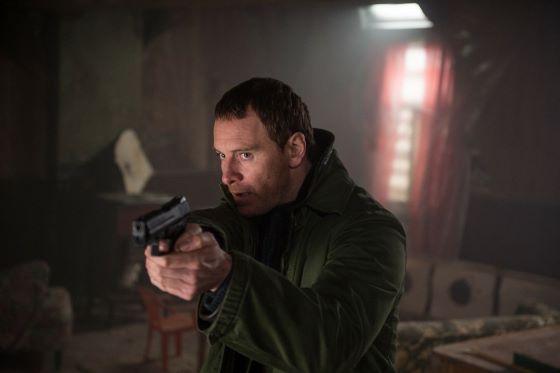
After a sprightly credit sequence highlighting the “tools of his trade”, we meet a highly-paid professional hitman (Michael Fassbender), whose real name is a mystery to us (and probably to many of his “hires”). His latest gig is in Paris (nice) but most of his time is spent waiting…and waiting in an “under-renovation” office space in a building across from a swanky hotel. The days pass so very slowly until his “target” finally arrives. The victim is in the sites of his top-of-the-line rifle, the trigger is pulled, and things “go sideways”. The hitman makes a mad dash into the Paris streets to the airport. There’s a heated cell phone exchange in which his “agent” says he’ll try to “make things right” with”the client”. After a stopover in Florida, “the killer” makes his way to his secluded estate in the Dominican Republic, arriving moments after some person or persons trashed the place, leaving someone near death. It’s then that the hitman becomes a detective, zeroing in on the “invaders”, as he “burns his bridges’ to exact his revenge. Can he find those responsible before he becomes a target? And can he ever really leave his past, and “the life” behind him?
The lead role provides a superb showcase for Fassbender, one of the screen’s most engaging actors. The title character doesn’t have many spoken lines directed at others, but his “stream of consciousness” narration not only guides us in his planning and preparation but offers terrific reflections, often very funny, on humanity in general. While making his way around the globe (literally)Fassbender does his best to be unnoticeable (with awkward hats swallowing his face) which gives his full “reveals’ a greater impact as his piercing glare bores into the sole of those in his gaze. Ths film’s other “big name” is probably Tilda Swinton as The Expert” who falls into The Killer’s vision. For a time she believes her air of refined elegance will charm him until we see her accept her “fate” with a resigned dignity. That’s unlike her partner, Sala Baker as “The Brute”, who proves to be the savage destructive force that may thwart The Killer’s quest. Charles Parnell is terrific as Hodges, “The Lawyer”, who truly believes that his logical arguments will force The Killer to spare him and come back into “the fold”. Ditto for Arliss Howard as the befuddled Claybourne AKA “The Client”, who realizes that his greed has led him to his probable doom. There’s also strong supporting work from Kerry O’Malley as the fluttery aide to Hodges and Gabriel Polanco as the “caught in the crosshairs” cabbie.
For director David Fincher, this film marks a return to his roster of stylized thrillers begun almost thirty years ago with SE7EN, after his most recent biopic MANK. But unlike those earlier films, this tale is “stripped down” to present a taut thriller via his frequent collaborator Andrew Kevin Walker’s adaptation of the acclaimed graphic novel by Alexis Nolent and Luc Jacamon. Fincher’s “rat-a-tat” use of quick editing (foreshadowed in the splendid opening titles enhanced with 60s retro graphics) immediately pulls us in. It even makes the lengthy “stakeouts” full of foreboding menace. The excellent location shooting gives us a peek into the title character’s skills in any setting from the tropics to the chill of Chicago. All of this is ably accented by the rich score by other Fincher “regulars” Trent Reznor and Atticus Ross. Yes, the tension level is high, but there are great dollops of dark humor throughout (loved the roster of phony, but familiar aliases). This should stand alongside the great hitman thrillers like THE MECHANIC and DAY OF THE JACKAL, while also giving a nod to Soderbergh’s HAYWIRE. Fans of flashy crime capers, and especially Fassbender, should set their sites on THE KILLER.
Sandra Huller as Sandra and Samuel Theis as her husband Samuel, in ANATOMY OF A FALL. Courtesy of Neon
ANATOMY OF A FALL begins with a deadly fall but another kind of fall is much of the fascinating, emotionally searing story, starring Sandra Huller, who was so outstanding in TONI ERDMAN. Huller plays Sandra, the German wife of a French man, Samuel (Samuel Theis) who is killed in a deadly fall from an upper level of their remote Alpine chalet home, a fall that quickly becomes suspicious, with circumstances pointing to the wife. The couple have a son who may or may not be a witness to what happened – if there is indeed a crime. Questions and doubts abound in this excellent drama.
ANATOMY OF A FALL won director/writer Justine Triet the Palme d-Or at Cannes, wowing both audiences and critics, and creating considerable awards buzz. Director Justine Triet’s drama is a near perfect combination of police procedural, courtroom drama, and psychological relationship drama with a deep dive into an unraveling marriage and complex family dynamics. The cast is outstanding, the photography striking and storytelling gripping.
The film is French and the story takes place in the French Alps but the film is mostly in English, the language shared by the German wife and French husband, and spoken at home with their son, with some French and a little German with subtitles. But because of the rules for the Oscars, this excellent film is not France’s submission for the International Oscar due to the amount of English spoken versus French.
Regardless, it is an Oscar-worthy film, and an impressive example of how an engrossing, edge-of-your-seat crime thriller film should be made.
In the film’s press notes, the director said that the idea of the film was to depict the downfall of the couple’s relationship, which we discover is teetering even before the fatal fall. References to the potential for a fall, physical or emotional, is everywhere.
From the beginning, with a shot of a ball bouncing down stairs, the photography emphasizes the steepness of the Alpine chalet home, giving us a sense that falling is an ever-present threat. Even the location of the house, perched on a mountain, reinforces this feeling of imminent falling.
The action begins with the German wife Sandra (Huller), an author, being interviewed in their home. Although the interview is why the young woman journalist is there, the author seems to keep delaying the interview’s start, asking questions about the interviewer, refilling her own wine glass and offering a glass to the interviewer, even though it is only mid-day. Eventually, the interview does start but as the interviewer switches on her digital recorder for her interview notes, loud music starts blaring from upstairs.
The author says it is her husband, who is listening to music while working on their attic, yet she makes no move to go and ask him to stop. After struggling for awhile to conduct the interview despite the noise, they finally give up and agree to meet another time, maybe in town. The author only looks slightly irritated, more sorry to lose the company than anything, while the interviewer is clearly frustrated, after having made a long trip.
The subtext that something else going on in this household is palpable, and our anticipation that something will happen as soon as the interviewer leaves is keen. Instead, the loud music continues and the camera’s focus turns to the couple’s son Daniel (Milo Machado Graner), who leaves the house with his dog, for a walk in the snowy landscape.
When the boy returns, it is to find his father’s lifeless, blodd-spattered body, face down in the snow, just outside their home. He yells for his mother, who rushes out of the house to find the shocking scene. Emergency services are called, as well as the couple’s long-time friend Vincent.
From then on, there is a flurry of police and ambulances, with the couple’s long-time friend Vincent (Swann Arlaud), a lawyer, arriving for moral support and to act as a buffer between the woman and the investigators. The first question is what happened: was it an accidental fall, a suicide or, perhaps, murder? The evidence seems to point to something suspicious, and those suspicions quickly fall on the wife. What had been an emergency response becomes a crime scene investigation.
ANATOMY OF A FALL unfolds like a police procedural and then a courtroom drama, but the whole while, an interpersonal drama is unfolding, one that reveals the nature of their marriage and the family’s history as layers are peeled back. A key for us, the audience, is the presence of the lawyer friend, who to be on hand during the investigation and to help support his friend, moves into the remote mountain home. There, he both consuls the widow legally and provides emotional support, but allows the audience to have a narration of what is going on, physically and emotionally. The lawyer is an old friend of the couple, and his awareness of their shared history, gives us an entry the couple’s private lives we would not otherwise get. One of the things we learn is that their son is legally blind, which may have an impact on what he can tell about what happened before the fall.
Through flashbacks to the couple together, including confrontations, we learn that things have been unraveling for awhile and why. These insightful scenes and conversations with the old friend, now her lawyer, alternate with the police investigation in the home, their interrogations, and crime scene recreations and later courtroom scenes.
In addition to the talks between the accused wife and her lawyer friend, we get scenes between the boy and a court-appointed advocate for him, who also keeps an eye on any attempt by the accused to influence what her son might say. There are, of course, scenes between mother and son, where she is solicitous and caring but also worried, both about how he will be affected by what has happened and what he may say or do with all that is happening.
ANATOMY OF A FALL is a film that always keeps you guessing. The woman appears dazed by what has happened and proclaims her innocence. In fact, she does not seem guilty to us but there are a lot of secrets about the couple’s relationship and a good amount of acrimony between them is revealed. Doubt creeps in, and we waver back and forth about whether we think she is guilty. We can’t rule out something that might have happened, maybe in the heat of the moment, but maybe more deliberate.
The effect is chilling but the film also makes a deep dive into the characters, revealing their past and their conflicted thoughts and emotions. This excellent film builds up a thriller tension as the investigation and trial unfold in parallel to its tense family drama, with deep insights into a failing marriage and complicated family relationships, all of which grabs and holds tight to our attention.
Sandra Huller is the amazing center of all this, delivering a powerful, multi-layered performance, while on screen nearly throughout. The other actors are excellent as well, particularly young Milo Machando Graner as their son Daniel, who undergoes a transformation as the secrets of his parents’ marriage are revealed. But the biggest acting burden falls to Huller. And she is supremely good, keeping us on our toes, revealing her character’s inner conflicts, her fears and anger, in creating this complex character.
ANATOMY OF A FALL is a title that might evokes another film, the classic ANATOMY OF A MURDER, a 1959 courtroom drama directed by Otto Preminger and starring Jimmy Stewart, but apart from being a courtroom drama (in part) with an accused central character, there is not a lot of overlap. In the case of ANATOMY OF A FALL, we follow the events of the fall from start to finish. Everything is in doubt, all characters may not be what they seem, and even whether a crime has occurred at alls is a mystery. It almost could have been called “anatomy of a marriage” but that does not cover it all either. One thing is certain in this fascinating drama is that there is more and more, as each layer is peeled back, in its riveting examination of relationships and events.
ANATOMY OF A FALL opens Friday, Oct 27, in theaters.
John le Carré (David Cornwell) in “The Pigeon Tunnel,” premiering October 20, 2023 on Apple TV+. Courtesy of Apple+
If it is true that to be a great writer, you need an unusual childhood, then the great spy novelist John LeCarre may be Exhibit A. Or so it seems in this fascinating documentary by Errol Morris, THE PIGEON TUNNEL.
Errol Morris, one of the most creative, compelling documentarians ever, turns his camera on perhaps the greatest spy novelist ever, John LeCarre, in the documentary THE PIGEON TUNNEL. The British writer and former spy who uses the pen name John LeCarre, but whose real name was David Cornwell, has turned out a remarkable string of spy novels, nearly all of which became bestsellers. From The Spy Who Came Into The Cold onward, John LeCarre has thrilled readers with spy novels that have the intriguing ring of real spy craft to them, unlike the James Bond adventurer type, transforming the genre of espionage novels.
“The Pigeon Tunnel” is the name of John LeCarre’s (aka David Cornwell’s) 2016 autobiography but it is also the place-holder name he used for his spy novels before they had their final titles. Near the beginning of the Errol Morris’ excellent documentary THE PIGEON TUNNEL, LeCarre related a rather chilling story about the origin of that phrase, a tale in which privileged guests at a grand Monaco hotel use a seaside-facing balcony to shoot at pigeons as they emerged from a tunnel, an entertainment arranged by the hotel, something young Cornwell says he witnessed while staying at the hotel with his free-spending gambler father Ronald “Ronnie” Cornwell, and one that illustrates a certain sense of cold entitlement and his lack of feeling.
Documentarian Errol Morris spoke with John LeCarre in an interview that ranged over four days in 2019. LeCarre is charming, cordial, erudite and often smiling, as he talks about his books and his work in secret intelligence, and most especially about his father Ronnie Cornwell, a charming swindler and gambler who was always in debt and sometimes in trouble with the law. LeCarre’s mother abandoned the family when he was five, leaving him and his older brother with his unreliable, philandering father. Growing up with such a father, truth was a stranger in their lives and his father involved his sons in his cons. When not in trouble with the law, Ronnie rubbed elbows with the upper crust and spent freely. There was little affection. It was a childhood that could not have been more unusual.
While LeCarre recounts his tales, Errol Morris works his signature magic, with actors re-enacting some parts of LeCarre’s life, particularly his youth and young adulthood, sequences so good you are drawn into them like drama and a bit surprised when you come back to the white-haired man in the room. We also get archival stills and shots of newspaper clippings, often headlines about Ronnie’s arrests or financial scandals. There are extended clips from films based on LeCarre’s books, primarily THE SPY WHO CAME IN FROM THE COLD and the British TV adaptation of the Smiley series of novels, starting with TINKER, TAILOR, SOLDIER, SPY.
While Errol Morris weaves his magic with archival materials, John LeCarre is filmed in ways that suit the spy tales or stories of growing up as the son of a conman. The shot is often cocked, a Dutch angle, and shooting into a room through a doorway or with eerie green light adds a sense of mystery. LeCarre never loses his temper, never raises his voice and only rarely looks even uncomfortable. With a few exceptions, like when he talks about his own father’s attempt to con him out of money, LeCarre is calm and collected, personable and polite – a charmer to the last.
But LeCarre begins the interview with a touch of wariness, quizzing director/interviewer Errol Morris about his “intentions” for the interview and asking how he should regard him – friend, adversary? When Morris replies that he honestly doesn’t know, and repeats it, LeCarre seems to relax as it satisfied with the vague answer. It sets a strange tone for all that follows, with us always wondering what is going on in his head,. behind the congenial smile. About recruiting spies, LeCarre describes how the British secret intelligence service looked for “boys who were a little bit bad but who were loyal,” those who had separated from family early by going to boarding school and has an early Independence – all of which he acknowledged described him perfectly.
As the two talk, the background sometimes shifts, from a library to a room with a large table and vertical windows. We see only LeCarre, although we sometimes hear Morris, as LeCarre talks about his books, his work in secret intelligence and especially about his childhood and his relationship with this unreliable father.
The one thing he seems to have done right, was seeing that his sons had good educations at public schools and went on to Oxford. The plan was for young David to be a lawyer but instead he studied modern languages, with the support of his tutor Vivian Green. Then MI5 came calling and espionage entered the picture.
John LeCarre’s spy novels were strikingly different from the James Bond adventure tales, with the feel of real spy craft and cerebral, coolly calculating cat-and-mouse games between adversaries on opposite sides of the Cold War. It was a revelation that transformed espionage novels. and led to a string of bestsellers and movies based on them.
All this adds up to a fascinating tour of the world of John LeCarre, his strange childhood, his days at Oxford where he studied modern languages and was recruited to spy for MI5, and his time with MI5 (British domestic security) and MI6 (international) during the Cold War that he wrote about so well. Blended with the excellent recreations and the archival footage and stills, and we feel completely immersed in John LeCarre’s world, fictional and not, always with the little hint of secrets still kept.
It is a world that LeCarre fans, like this writer, won’t want to leave. But leave we must, as the film comes to an end and we are left with the knowledge that is was LeCarre’s last interview before his death in 2020. But is was fascinating while it lasted, much like LeCarre’s always smart and nuanced spy novels.
PIGEON TUNNEL is available streaming only on Apple+ starting Friday, Oct. 20.
Lily Gladstone and Leonardo DiCaprio in “Killers of the Flower Moon,” premiering in theaters around the world on October 20, 2023. Courtesy of AppleTV+
In the 1920s, the people of the Osage Nation became the richest people on earth after oil was discovered under their supposedly worthless land. The money drew ambitious white men and not long after, Osage began to die in a series of suspicious deaths, some of which were clearly murder. Based on journalist David Grann’s bestselling non-fiction book “Killers of the Flower Moon: The Osage Murders and the Birth of the FBI,” Martin Scorsese’s KILLERS OF THE FLOWER MOON turns that non-fiction book into drama that combines elements of romance, mystery, and the history of the 1920s Osage murders, in an epic Western thriller starring Leo DiCaprio, Robert De Niro and Lily Gladstone.
Grann’s non-fiction book details these killings and suspicious deaths, which occurred as fortune-hunting white men found that marrying Osage women was a way to access the Osage Nation’s wealth. Their arrival was followed by a series of brutal, mysterious deaths, first noticed in 1921, but continuing for a long time with little investigation by the local authorities charged with overseeing law enforcement on tribal lands.
Scorsese turns this horrendous bit of history into an epic tale of evil, greed and deceit set in a sweeping Western landscape with one of unexpected love, in a visually lush, moving, tragic film. The film was a hit a Cannes, where it debuted out of competition. The film has resonated with both critics and audiences, but the most positive responses seem to come from those who read the bestselling non-fiction book. There is no need to have read the book to follow the story but it seems that having done so might deepen understanding of the Osage Nation’s plight. Scorsese’s film focuses primarily on this one story, while the non-fiction book takes a broader view.
Scorsese’ movie follows the deaths in one particular Osage family, of which Mollie Kyle is one daughter of the ailing matriarch, played by legendary Native actresses Tantoo Cardinal. Ernest Burkhart (Leonardo DiCaprio) returns from World War I with a war injury that limits the kind of physical work he can do, and comes to stay with his uncle William Hale (Robert DeNiro), known as King, hoping to find work. The uncle has a prosperous ranch within the Osage reservation but his land has no oil. Having lived there so long, King Hale has established friendly ties with the Osage Nation, and even speaks the language, but he is also a powerful man some fear. King sees an opportunity with his handsome but not-too-bright young nephew, and before long he is hinting that his nephew might want to marry one of the Osage women, and even offers some advice when speaking to them.
Ernest listens politely but doesn’t entirely buy his uncle’s idea. Still, in addition to doing odd jobs for his uncle while living in his mansion, Ernest also drives an informal taxi service since most of the Osage don’t drive. While richer Osage have chauffeurs but others just hire taxis like Ernest’s. Waiting for potential fares, he spots and taken by one pretty young Osage woman, Mollie Kyle (Lily Gladstone). She coolly rebuffs his offer, and his flirtatious advances. Yet, later when she does need a ride and he again badgers her to let him drive her, she begrudgingly gives in.
She remains stand-offish during the ride but over the next days, his persistence and good humor start to amuse her, and she softens. “He’s dumb but he’s handsome,” she tells her sister, shortly before she invites him to dinner at her home, a mansion she shares with her aging mother Lizzie Q (Tantoo Cardinal).
Ernest is truly smitten almost from the start and Mollie eventually falls for him too. The love match certainly is convenient for the uncle who has his own plan for his nephew’s new wife and her family.
Leonardo DiCaprio and Robert DeNiro are excellent, essentially playing against type with DiCaprio’s dimwitted Ernest manipulated by DeNiro’s Machiavellian uncle. But the big revelation is Lily Gladstone, in what may be a star-making performance. Scorsese cast Native actors in several roles as Osage, including Lily Gladstone, who is of Piegan Blackfeet and Nez Perce heritage and grew up on the Blackfeet reservation, but she is also a cousin of British former prime minister William Gladstone. She gave standout performances in small roles in two Kelly Reichert films, CERTAIN WOMEN and FIRST COW, but this larger starring part gives her a chance to really shine. And shine she does, nearly stealing the movie from her more famous costars.
Robert DeNiro’s uncle King is all sweetness and solicitousness when dealing with the Osage, and even his nephew Ernest, most of the time, but he can forcefully, frighteningly pivot if he doesn’t get his way. Even in his smiling mode, DeNiro’s King has an underlying current of menace. The Osage deal with him as a friend in public but when just among themselves, there is fear and growing suspicion. Ernest isn’t the only white man to marry into Mollie’s family, and the family trait of diabetes means that Mollie, her mother and one sister are often sickly, in this pre-insulin era. DiCaprio’s Ernest gives mixed messages about who he is and his true motives, seeming to truly waver between good and bad, although we are never certain, and perhaps Ernest isn’t either.
But as people start to turn up dead, even in Mollie’s family, in freak accidents and even clear murdered but with no suspect found, things grow tense and then frantic. The Osage leaders know the community is under attack but are powerless to stop it.
Several messages and messengers are sent to the federal government back east, alerting them to the murders, with little effect. Finally a representative of the newly-formed FBI appears, in the form of seemingly mild-manner official, played well by Jesse Plemons.
Epic is the right word to describe this drama, as this film runs about three and a half hours. However, the film is so well structured, so involving and gripping, and so perfectly paced, that one does not feel the running time.
The photography is stunning, as are the costumes and careful attention to period details, making the film both an immersive experience and visually pleasing. In an opening scene, oil gushes from the ground, spewing over some Osage men transversing the windswept plain, symbolicly covering them. In another moment, a huge fire fills the screen in a nighttime scene, creating a horrifying image that mirrors the growing panic of the Osage people under attack by the hidden foe. Eventually tTension is so thick as the drama unfolds that both the characters and the audience are on edge.
Scorsese also skillfully uses a number of period-appropriate techniques to give us a strong sense of time and place for this moving drama. These include written text in a form that resembles title cards in silent movies of the era, newspaper headlines and newsreel footage in movie theaters referencing the Tulsa Massacre, which overlapped these events, and period appropriate jazz, blues and old-time country music. Towards the end, Scorsese uses a radio drama format in a thrillingly effective scene.
One does not have to have read the excellent non-fiction book to follow this tale of love, betrayal and murder, but having read the book deepens one’s understanding of the history it depicts. The film only lightly touches on details such as that Osage were among the peoples relocated to what would become Oklahoma in the Trail of Tears tragedy. Like the Cherokee, the Osage had made a decision to partly assimilate while retaining parts of their culture, in their own fashion, trading with the white economy and adopting some of white culture such as a written language. The hope was to avoid the annihilation happening to other Native peoples, by becoming “civilized” and working in partnership with whites.
The drama unfolds in stages, smoothly shifting at each step, first a romance and family drama, then a crime drama and mystery, then a courtroom drama. At each pivot point, the characters develop and transform, revealing more of their true nature or being changed by events. The end is both heart breaking and exactly as it should be. It all adds up to a stunning piece of cinema on a unjustly forgotten moment of in the long history of injustices toward Native peoples. KILLERS OF THE FLOWER MOON is a masterpiece movie by a master filmmaker, which seems a likely Oscar winner.
KILLERS OF THE FLOWER MOON opens in theaters on Friday, Oct. 20.
Sometimes we just need to see a flick that gets us motivated. To get us off our “duff”…after we watch it, of course. That was certainly the case with the original ROCKY series which carried over into the current CREED franchise (who hasn’t heard Bill Conti’s score as they begin a run). Yes, the sports genre can be inspiring, plus you can double that when it’s a true tale, a “sports-biopic”. But could you triple the “push” when the movie’s subject is still with us? It’s a good possibility when a couple of superb actresses combine talents with two Oscar-winning documentary filmmakers to tell the tale of the long-distance swimming legend known as NYAD.
This film begins with a montage of archival footage of the tile champion, as she competes in tournaments, breaks records, and is interviewed by the undisputed “king of late night”. Now that’s right as she attempted to swim from Cuba to Key West, Florida way back in 1978. But strong winds made for rough seas that prompted doctors to remove her from the “shark cage”, despite her passionate protests. The film then jumps ahead 31 years as Diana Nyad (Annette Bening) is embarrassed by a surprise 60th birthday party orchestrated by former swimming coach (and romantic partner) Bonnie Stoll (Jodie Foster). After the guests leave, Diana drops a “bombshell” on her: a return to long-distance swimming to finish the Cuba to Florida trek. Bonnie is stunned and refuses to aid Diana, insisting that the years have taken its toll. Undaunted, Diane begins her endurance training at the local pool, and eventually Bonnie drops by to see her progress…and finally agrees to this “project”. Thus begins a multi-year odyssey as the duo struggles to get sponsors, enlist a crew, plot out a strategy, and gather the necessary tools. Those being the proper swimming gear and most importantly, a “guide boat” to navigate the waves beside her. Although team Nyad has a testy first meeting, Captain John Bartlett (Rhys Ifans) agrees to be at the wheels while monitoring the weather conditions. Oh, and this time there will be no protective cage around Diana, as two men in a raft will dangle “sound wires” that emit a hum that repels sharks. They’ll be on the other side of her, but what of the other “sea menace”, the box jellyfish, whose sting can quickly kill? At least Bonnie will be there to make sure that Dyan gets her “fuel” (pasta on a pole and liquids through a very long straw). The team endures multiple setbacks as Diana strives to prove that she’s not ready to “sit it out”. But will time sap her strength and stamina?
Those two powerhouse actresses propel this film past the standard “against the odds” biopic. Naturally it all sinks or swims on the efforts of the title interpreter. As is often the case, Ms. Bening is the epitome of fierce determination as the warrior who pushes through the pain. But her take on Ms. Nyad isn’t always on a “pedestal”. In the opening scenes, we see her hesitation and discomfort in social situations. Plus there an uncertainty as she watches the “younger set” glide past her in that public pool. Then we see Bening “re-charged” as the big day nears. And there’s much more of that fighting spirit as she pushes hard against the well-meaning efforts of her crew. Most protective is Bonnie played by Ms, Foster as the very definition of a supporting role. We can see her frustration as, like Pacino in his third time as the Don, she’s “pulled back in”. Foster shows us how the hours at sea wear on Bonnie, as she tries to gauge the condition of her friend, protecting Diana even as she rebuffs her concerns. Much the same can be said of Ifans as the crusty “old salt” who breaks through his own negative space to embrace Nyad and Bonnie’s dream of beating “ole’ King Triton”. Ifans shows us how Bartlett slowly embraces his role on the team, even letting a bit of optimism into his noggin’.
It’s hard to fathom (sorry) that this is the first narrative feature for directors Elizabeth Chai Vasarhelyl and Jimmy Chin as they make several bold narrative choices that create as much tension as their Oscar-winning doc feature FREE SOLO, a true “nail-biter”. Working from Julia Cox’s screenplay adaptation of Nyad’s book, the duo finds a way to make us feel as though we’re floating alongside Diana while navigating through her memories. She’s fighting the repetition, the cold currents, the weather, and her memories of childhood trauma. Nyad first endures the breakup of her family as she’s torn away from her beloved, nurturing Greek papa, then must deal with horrific sexual abuse from a surrogate father figure, her high school swimming coach. We piece this together via the flashes in Diana’s brain as she tries to block out weird images as the illusions creep in. Happily, the directing duo doesn’t allow the film to get bogged down in the plans and special devices and gizmos (aplenty), though some of them seemed lifted from a spy caper or a science fiction story (Diana wears an odd full face-hugging mask that makes her a resembles a blank-featured alien, much like Odo on “Star Trek: Deep Space Nine”). As with Bening’s last nonfiction role of screen vamp Gloria Grahame, the archival footage of the real person isn’t jarring in the least. The cast and the filmmakers realistically convey all the hardships and triumphs of these two remarkable women as they make a place in the history books (and websites) for the astounding athlete named NYAD.
It looks like another stand-up comic has decided to expand on his stage persona and make the jump to a feature film. Of course, that’s nothing new as comedians have been doing this since the first filmed pratfall or wise-crack. Things are a bit more welcoming now as the onslaught of streaming services have put out a big “welcome mat” to the jokesters, raking in lots of new subscribers with taped comedy concerts, usually running about an hour or so, perfect for those needing a quick fix of laughter. It has worked for Kevin Hart and Amy Schumer, and Jo Koy’s autobiographical EASTER SUNDAY certainly found an audience at the multiplex. Will the same happen to this touring comic who pushes against the current culture? Well, it’s going straight to streaming, which might be the perfect home for a trio of OLD DADS.
The de facto leader of the threesome (think Moe without the bowl haircut, or no hair at all) is Jack (Bill Burr). He’s living the good life in the suburbs of Pamona, CA in a home with his gorgeous wife Leah (Katie Aselton) and their adorable five-year-old son along with one “on the way”. Oh, Jack is just past the big “5-0”, hence the flick’s title. Speaking of, the other dads are his best pals. There’s high-energy Connor (Bobby Cannavale), who loves to have fun as long as he can hide from his intimidating wife Cara (Jackie Tohn), who lets their five-year-old son run wild. And there’s Mike (Bokeem Woodbine) who’s living with his gorgeous much younger girlfriend Britney (Reign Edwards) after getting his two sons from a previous marriage into college. These days the guys are especially happy since they’ve sold their sports apparel business and are now senior employees . But this doesn’t sit well with twenty-something new owner Aspen (Miles Robbins) who wants to revamp the place and toss out anyone over 35. To keep in his “good graces” the guys go on a disastrous road trip. This gives Jack more agita when dealing with the “touchy-feely” head of his son’s ritzy private school, the “doctor” (Rachael Harris), who enlists him and Connor to run the big school fundraiser. And then Britney drops a bombshell on Mike. Suddenly it feels as though the entire world has turned on the old-fashioned “ordinary Joes”. Can they ever catch a break or will the new social rules of the 21st century crush them?
Since this film is an extension of his stand-up monologues, the first in the cast would be Mr. Burr (who also is a big force behind the camera). He seems fairly comfortable in this lead, and quick with line delivery while not given a big emotional range. Jack goes from affable “bro” to enraged alpha at almost regular intervals, though we get a bit of his softer side as he deals with his wife and son. Cannavale has more to do, as he must become the modern henpecked hubby, then shift into the “over-served” wildcard, before eliciting the most laughs as he desperately tries to be hip with the younger staff at work, while checking himself for wrinkles and grey hairs. Much more mellow is Woodbine whose Mike gets great delight in testing the boundaries of modern race relations, especially for fans of rap music while never flaunting what appears to be his charmed homelife. As for their “better halves”, Aselton does a variation of the long-suffering but adoring missus since often in modern sitcoms like “The King of Queens”, who has her hubby’s back despite her snarky asides and eye rollings. Tohn is effective as the cartoonish new age shrew who has a fast sneer for anyone questioning her parenting “style”. On the “flip side”, Edwards is the sweet “pixie girl” of Mike’s (and most guys) dreams who shows her strength when fate throws the couple a big “curve”. As for the “cancellers”, the too-sensitive villains, the “work jerk” is the obnoxious Aspen played with an aloof arrogance and casual cruelty by the wispy Robbins. But the real “big bad” may be the passive-aggressive “back-biter” who’s the head of the school played with eyebrow-arching relish by the delightfully devious Harris who earns the jeers and hisses of the audience.
Oh BTW, Mr. Burr is the film’s director and the co-writer of the script, as I hinted earlier. It’s the showcase for his character who delights in “pushing buttons” as he “melts the snowflakes”. It may play better as a standup set as the ranting and confrontational sequences become grating and abrasive after the first act or so. It feels as though the whole thing is a verbal comic riff on the “crime alley” training exercise for police trainees. Jack enters another area, a “way too woke” doofus pops up, and he must mow em’ down with a nasty but well-deserved “burn”. Yes, they’re true “cardboard” targets in his takedown on the irritants in society of the new world. Burr’s longtime fans will take great delight in Burr’s battle, but “newbies” will be tempted to grab the remote and start a’ scrollin’. And the use of hidden cameras to take down the trio would never fly for an instant despite the “softening” of the culture. It all comes together in a strip club finale (perhaps to get some of that HANGOVER vibe) and a cliched race to the hospital that sadly involves a beloved veteran actor in a thankless cameo, this after a current gifted thespian is wasted in a “throw-away” bit. The whole film is shot like a flat one-camera sitcom, with a structure that feels like several episodes strung together. I appreciate that Cannavale was putting an energetic effort into Connor, but only rapid fans of Burr’s specials will relish this feature-length farce with him as the general leading the charge of these OLD DADS.
1.5 Out of 4
OLD DADS streams exclusively on Netflix beginning on Friday, October 20, 2023